

Young Men and Ire
What’s going on with Gen Z? Two stories this week offer some insight

It’s a commonplace that the youngest generation of voters is different in some important ways from the generations that came before it, not just politically, but culturally and perhaps cognitively.
Even before Trump’s re-election, political observers were seeing a gender gap in the youth vote. A May 2024 report by the Brookings Institute found that among voters age 18 to 29,
young women [are] significantly more Democratic in their political leanings than young men. Young women have become significantly more liberal and embraced “anti-patriarchal” values over the last decade, while young men have stayed relatively the same. Young men increasingly feel as though they have been experiencing discrimination over the past four years.
A Pew survey last fall found that “women are outpacing men in college completion, including in every major racial and ethnic group.” Even in K-12, “girls have an easier time adapting to the requirements of a classroom,” giving them an advantage well before college starts.
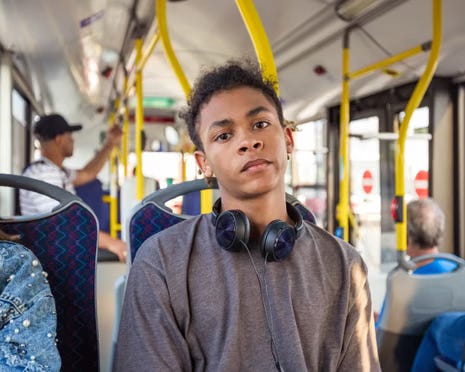
There’s no shortage of putative causes. One leading idea involves the rise of the service economy and “rapid societal changes combined with a market shift from brawn to brain have left many men feeling bereft and without purpose” — a so-called “male malaise” in which “boys and men in the modern world are falling behind in education, increasingly disconnected from work, [and] disproportionately the victims of “deaths of despair.”
If we’re ever going to dig ourselves out of the anti-democratic hole we seem to find ourselves in, we’re going to have to understand what’s going on deep within our culture. A couple of disparate stories from this week seem to offer some insight.
The first comes from Charlie Sykes, a long-time conservative commentator in Wisconsin, where he had a talk show for many years. I disagree with Sykes more often than not, but he has a podcast and a Substack that I pay attention to, and not just because he’s a former hard-core Republican turned never-Trumper. (He has a weekly chit-chat with Tom Nichols that I mostly ignore, because I get enough Tom Nichols from the Atlantic’s daily emails and because they don’t much disagree with one another.) But Sykes also has on his podcast people I don’t hear from, and a conversation with one of them this week was, to me, revelatory.
Sykes’s guest was Paul Rykoff, founder of Independent Vets of America, which seeks out and supports veterans to run for office as independents. It’s an interesting group, and a little scary, because Rykoff seems to have a libertarian streak and a pox-on-both-their-houses approach to the two major political parties. It’s a version of false-equivalence that seems dangerous, but at its best it can result in a candidate like Dan Osborn, who damned near took a Senate seat from Republicans in Nebraska last year.
But this isn’t about that. It was Rykoff’s experience coaching youth sports that I found arresting. I’m going to quote from the podcast transcript here. It’s a bit lengthy, but I think it’s worthwhile.
Rykoff: I recommend that anybody coach youth sports at some point in your life. I think it’s almost more important than military service. I coach soccer and I coach flag football. …
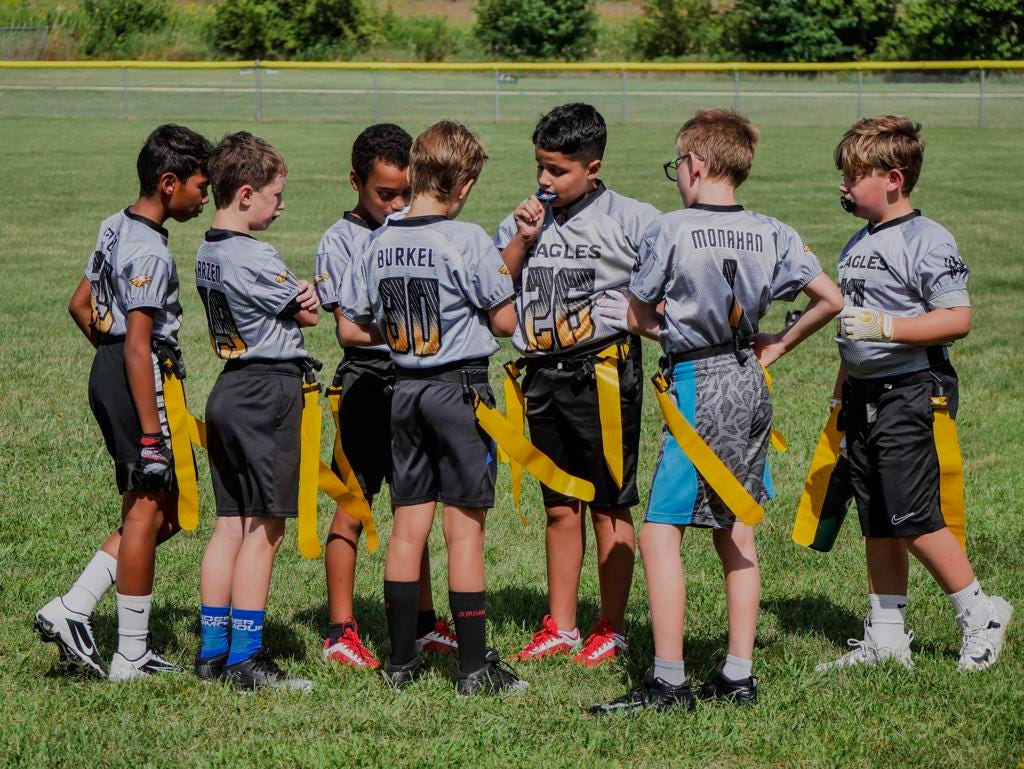
Let me give you an insight into what’s really hard right now. Getting kids to focus in the huddle. Getting them to look at me, to listen to what I’m saying, to process the information that’s coming out of my mouth and then go execute on a five-man football field.
And I’m coaching kids that are six all the way up to like 11. And at that age group, I’m in the huddle. I’m the coach. So I sit there and I show them the play and I say, OK, everybody, let’s get in the huddle. Here’s the play.
Getting them to look at me and focus on the play that I’ve written out and I’m showing them. And then at the end of the huddle, you get, okay, guys, ready, break. Getting them united in an actual, in real-life form, not in a video game. Then they have to walk up to the line.
And what’s really important about football, I think, is discipline, right? Yeah. Teamwork, discipline where you got to get five guys in this case or 11 guys — or now girls because girls are playing flag football — to get them on the same page united and executing but the insight that I know teachers see is kids don’t look at you, they don’t look at each other, they’re off out here and they’re not locked in. And part of what I am really proud of is getting them to focus, getting them to work together, getting them to respect each other, getting them, frankly, just to shut up in the huddle for 30 seconds. … I’m like, guys, you got 30 seconds. If you all talk, we don’t get to play out, we get a penalty.
And that’s kind of America right now …
They’re not used to social interaction in real life. They are on devices so often that it’s really hard to hold their attention. It’s really hard for them to have the discipline to focus. Sometimes they’re uncomfortable because they’re not used to adults actually looking at them and talking at them.
So, what’s going on that boys are growing up without the ability to focus or interact? One answer seems to be that they are being shaped by an online culture that’s inimical to it, according to an article on Medium, “How Young Men Are Being Manipulated Into Hating Women” (link here; note members only).

While the article is specifically concerned with rampant misogyny, and while that’s horrifying enough, it seems to offer broader lessons about what’s going on.
The article describes a study conducted by reporters at The Guardian.
They bought new phones and set them up with new email addresses that hadn’t been used for anything. Then they set up Facebook and Instagram accounts.
The profiles they created were for twenty-four-year-old men.
The profiles had no friends, no viewing history, and they turned off all ad tracking, so there was nothing to draw the men’s interests from.
Here’s what happened on Facebook. On day one, they saw sitcom memes, news articles, and jokes from The Office. Day two they saw more of the same, plus Star Wars memes and “dude bro” content, like buffed gym shots. By day three, sexist content was already starting to show up in the feed.
Meanwhile, Instagram was going crazy, showing them photos of women in skimpier and skimpier bikinis.
Most importantly, these fake profiles clicked on nothing.
For three months, they [the reporters] just watched those accounts.
Three months later, the feeds were full of sexist and misogynistic content that appeared with no input from users.
The study notes that this directly contradicts claims made by Facebook that users’ feeds are personalized and are “influenced by their choices and actions.”
These results were, it turns out, consistent with earlier findings.
The Guardian did similar experiments in both 2022 and 2024 on YouTube and TikTok, in which multiple accounts set up as young men and teenage boys were very rapidly funneled to “manosphere” content.
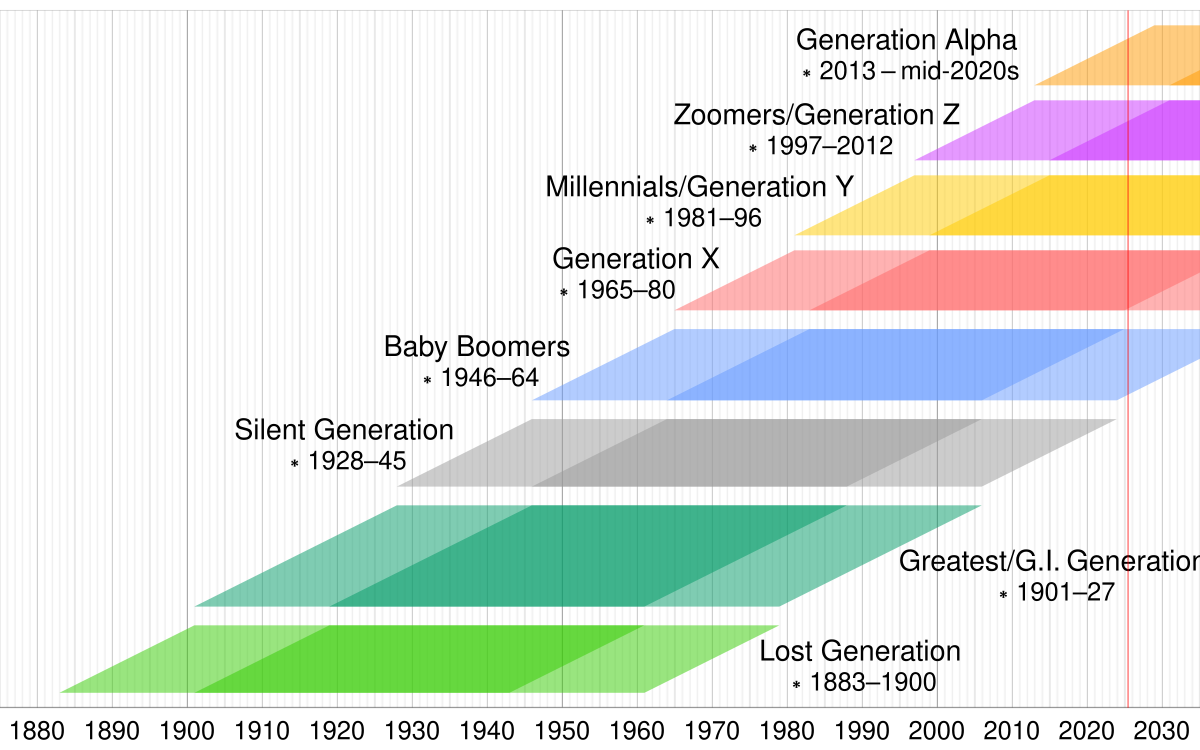
If, as one set of statistics reports, “Generation Z, born between 1996 and 2010, typically spends around 9 hours a day on screens,” and children “aged 8 to 18 typically engage with screens for around 7.5 hours per day for entertainment purposes,” and even younger children, “aged 8-10, average close to 6 hours a day,” is it any wonder their behavior reflects a culture inside those screens far more than it does what coaches and even parents would like to inculcate?
I’ve written in the past about the loss of so-called “third places” (places that are not home and work) — “cafés, coffee shops, bookstores, bars, hair salons, and other hangouts at the heart of a community,” as the 1989 book, The Great Good Place, puts it.
Rykoff, as a veteran, focuses on military service, but he’s looking at the same problem when he says,
It’s the opposite of World War II, where you had so many people who had served and sacrificed and been together, and they had to be creative and ingenious. Now you’ve got extremely isolated people who have not served in the military, haven’t had a common experience, and their common experience is like video games. Or UFC [Ultimate Fighting Championship]. And it’s really created a demented environment … Sports participation is down. Military service is down. This is a very dangerous cauldron that we have in this country that Trump is often manipulating and also even worse, extremists are manipulating.
What’s distressing about Rykoff’s coaching experiences and The Guardian’s experiment is the idea that the world inside our screens has not only replaced third places but that it’s a cesspool of misogyny, machismo culture, and isolation. (I’m going to skip the obvious Pete Hegseth rant here.)
To be sure, many — maybe even the vast number of — young men and young women come out of childhood and adolescence as socially sane people, but right now, the extremists have their hands on the steering wheel of our culture, and the question is, how are we to loosen their grip if their numbers keep increasing?